
Recurring Crypto Subscription API Integration: A Developer's Guide
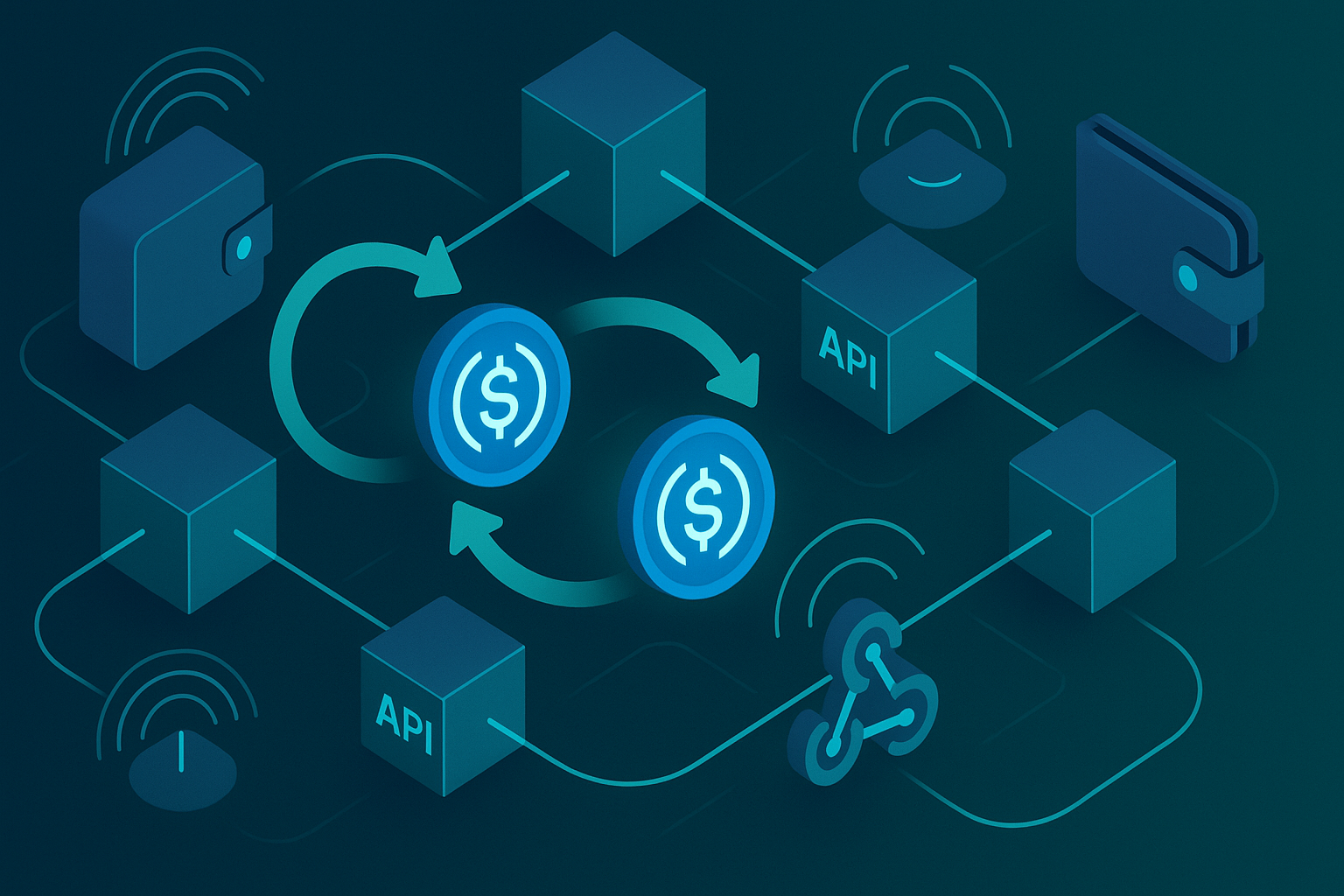
If you are building a membership platform or SaaS product that needs recurring crypto subscription API integration, the first thing you need to understand is that crypto does not work like a credit card — and designing your system around the wrong mental model will cost you weeks of rework. This guide walks through how recurring crypto payments actually work on-chain, what the approval/allowance patterns look like, how platforms handle the scheduling layer, and how to wire up webhooks and retries so your backend reacts correctly when payments succeed or fail.
Why Blockchain Has No Native "Pull" Payments
Traditional card billing is a pull model: the merchant's processor charges the card on file, and the card network authorises it. On a public blockchain, no such global authorization network exists. A wallet's funds cannot be moved without the owner's signature — which means a subscription service cannot silently charge a subscriber at renewal time the way Stripe does.
This is not a bug; it is a security property. But it creates a real architecture challenge: you need a mechanism that lets a user pre-authorize future charges without requiring them to sign every individual transaction.
There are three dominant approaches in 2026:
ERC-20 approve/allowance (classic pattern). The subscriber calls approve(spender, amount) on the USDC contract, granting your payment contract the right to call transferFrom up to that amount. Your off-chain scheduler then calls transferFrom at renewal. The downside: approve requires a separate on-chain transaction, costs gas, and adds friction. Unlimited approvals are a security risk — best practice is to approve the exact amount needed for the next billing cycle, or use the approve-to-zero-then-set pattern.
EIP-2612 Permit and Permit2. Modern USDC implementations support EIP-2612, which lets the subscriber sign a typed message off-chain (no gas) that the payment contract can redeem in the same transaction as the transfer. Uniswap's Permit2 extends this further: the subscriber approves once to the Permit2 singleton, then authorizes individual applications via off-chain EIP-712 signatures. This dramatically reduces friction and gas costs compared to classic approve calls.
Smart-account session keys. ERC-4337 account-abstraction wallets can issue scoped session keys that authorize a delegate to pull up to a defined amount on a repeating schedule, with the cap resetting each cycle. The authorization lives in the account's policy, not a simple allowance, giving users tighter control — this is the direction high-end infrastructure is moving for subscription use cases.
Webhooks, Idempotency, and Retry Logic
The event loop is where most integrations go wrong. Crypto payment webhooks carry different failure modes than card webhooks, and conflating them leads to bugs like duplicate access grants or missed revocations.
Events to handle. At minimum, your endpoint needs to handle: payment.confirmed (funds arrived on-chain, confirmed to sufficient depth), payment.failed (the scheduled attempt could not execute — typically an insufficient allowance or insufficient balance), and subscription.completed (all scheduled payments processed). Some providers also emit payment.pending at broadcast time; treat this as informational only and gate access only on payment.confirmed.
Idempotency. Webhook delivery is at-least-once. Build your handler to be idempotent: store the payment ID and check for it before processing. A duplicate payment.confirmed event should be a no-op, not a second access grant.
Retry schedules. When a payment fails, well-designed APIs pause the schedule and fire payment.failed. Your backend should immediately flag the subscription and prompt the subscriber to top up or re-authorize. Do not silently retry — on-chain, a failed transferFrom is a hard failure, not a soft decline. Exponential back-off retries make sense for webhook delivery failures on your end, but the underlying payment should only be retried after the subscriber resolves the root cause.
Signature verification. Always verify the webhook signature header against your shared secret before processing the payload. This prevents replay attacks and spoofed events from manipulating subscription state.
Putting It Together: Integration Checklist
A complete recurring crypto subscription API integration involves more moving parts than a card subscription, but each part is well-defined. Here is a practical checklist:
- Choose your approval mechanism. EIP-2612 Permit or Permit2 for low-friction subscriber UX; classic approve/allowance if you need broader wallet compatibility. Document which you require in your onboarding flow.
- Use a managed scheduling API. Building your own on-chain scheduler is months of work and audit surface. Prefer a battle-tested provider (Request Network, BoomFi, 0xProcessing, Cryptomus) unless you have specific reasons to own the execution layer.
- Store the recurring-payment ID, not just the transaction hash. The ID is your handle into the schedule's full lifecycle.
- Implement idempotent webhook handling with a processed-event log keyed on payment ID plus event type.
- Handle
payment.failedimmediately — revoke or flag access within seconds, not hours. Crypto has no chargeback window; the subscriber's allowance simply was not there. - Test on a public testnet first. Polygon's Amoy testnet provides free USDC faucet funds and lets you exercise the full webhook lifecycle without real money.
- Audit your allowance risk surface. If you use classic approve, never request unlimited allowances. Scope approvals to the subscription amount and cycle.
Conclusion
Recurring crypto subscription API integration is achievable today, but it requires accepting that the push/approval model is fundamentally different from card-on-file billing. Understanding ERC-20 allowances, Permit2 signatures, and the role of an off-chain scheduler will save you significant debugging time. Wire up your webhooks carefully, build for idempotency from day one, and you will have a billing system that settles directly to creator wallets — no intermediary holding funds, no chargeback risk, and no card-network restrictions.
For more on the creator-facing side of crypto memberships, see our guide on how to get paid in USDC as a creator. If you are evaluating self-hosted options, the self-hosted crypto payment gateway guide covers what that architecture looks like end-to-end.
Ready to earn in USDC, to your own wallet?